
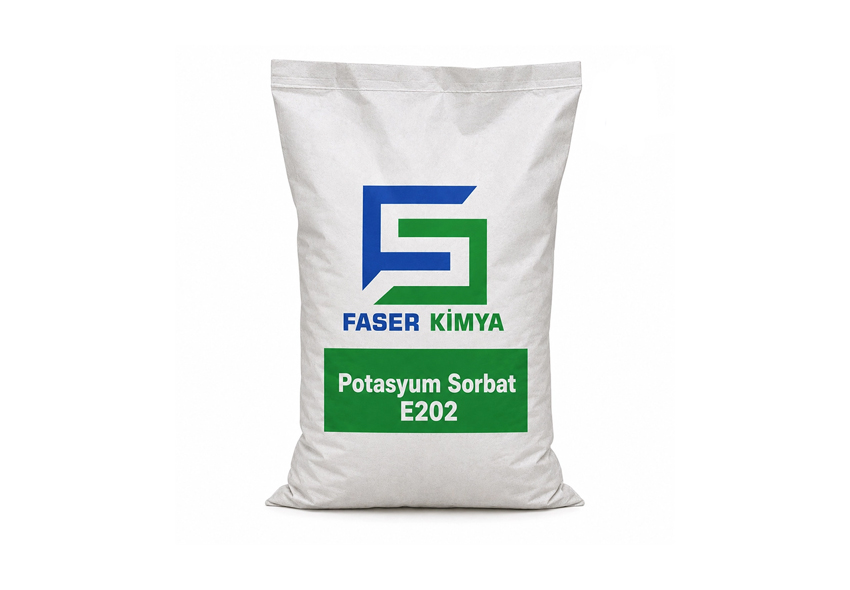



Potassium Sorbate (E202) is one of the most widely used preservative additives worldwide in the food, cosmetics and pharmaceutical industries to prevent the formation of mold, yeast and fungi.
It is obtained from sorbic acid, which is naturally found in the fruits of the rowan tree (Sorbus aucuparia); however, in industrial production, it is a synthetically produced salt form.
Here are the basic details you need to know about potassium sorbate:
How Does It Work?
Potassium sorbate becomes active by combining with the pH balance of the product to which it is added (especially in acidic environments with pH 6.5 and below). It penetrates the cell membranes of microorganisms by using the water molecules in the product and stops their reproduction. Although its effect against bacteria is limited, it is extremely powerful in preventing mold and yeasts.
In Which Products Is It Used Most?
Since it extends the shelf life of foods without changing their smell, color and taste, it has a very wide range of use:
- Dairy Products: Yogurt, cheese varieties and margarines.
- Beverages: Wines (to prevent the wine from fermenting again after bottling), ready-made fruit juices and carbonated beverages.
- Bakery and Pastry Products: Packaged breads, cakes, pastries and dough products.
- Dried Foods: Dried apricots, dried figs, dried plums and dried meats (pastrami, sausage, etc.).
- Cosmetics and Personal Care: Shampoos, moisturizing creams, wet wipes and makeup products.
