
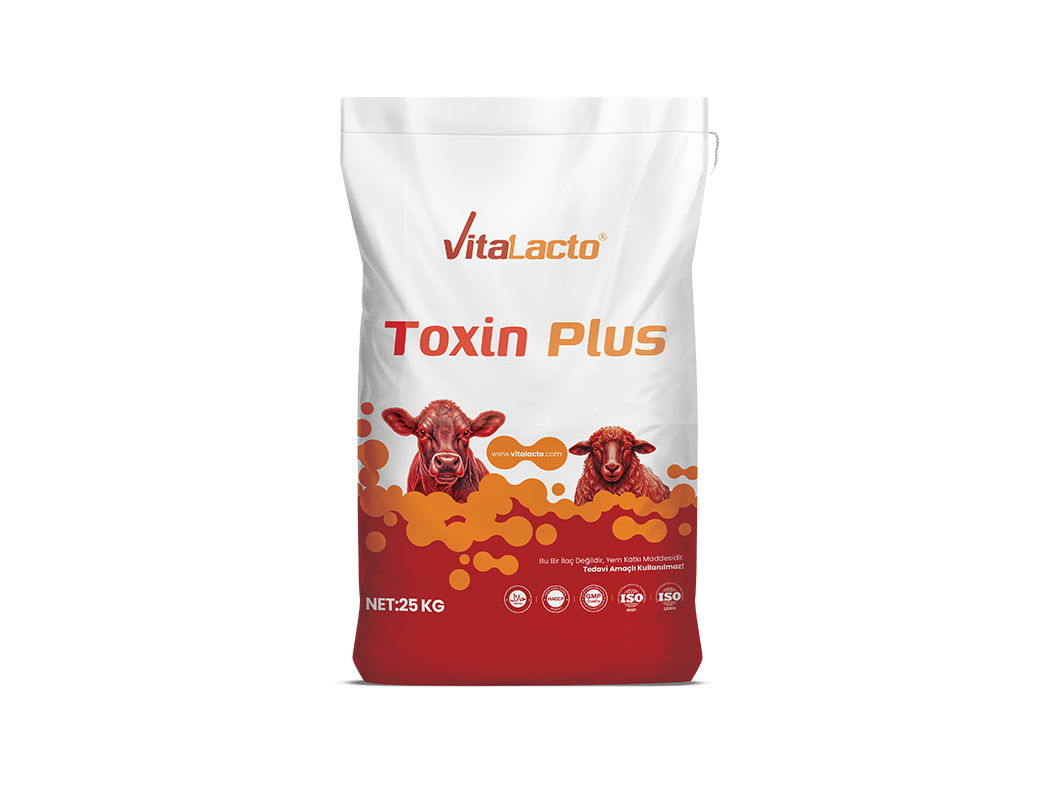



It is used to bind toxins that may be present in concentrate and rough feeds included in the rations of cattle and small ruminant farm animals and to ensure their removal from the body. By neutralizing toxins, it protects animals against poisoning and contributes to preventing productivity losses caused by toxins.
Its effectiveness has been enhanced thanks to its high binding capacity. It supports the elimination of performance decline caused by aflatoxins. It enables aflatoxins that may be present in spoiled or moldy silage, beet pulp, straw, concentrate feed, and other feed raw materials to be bound and excreted via feces.
It also helps retain ammonia formed due to high protein consumption and supports its removal from the body.
